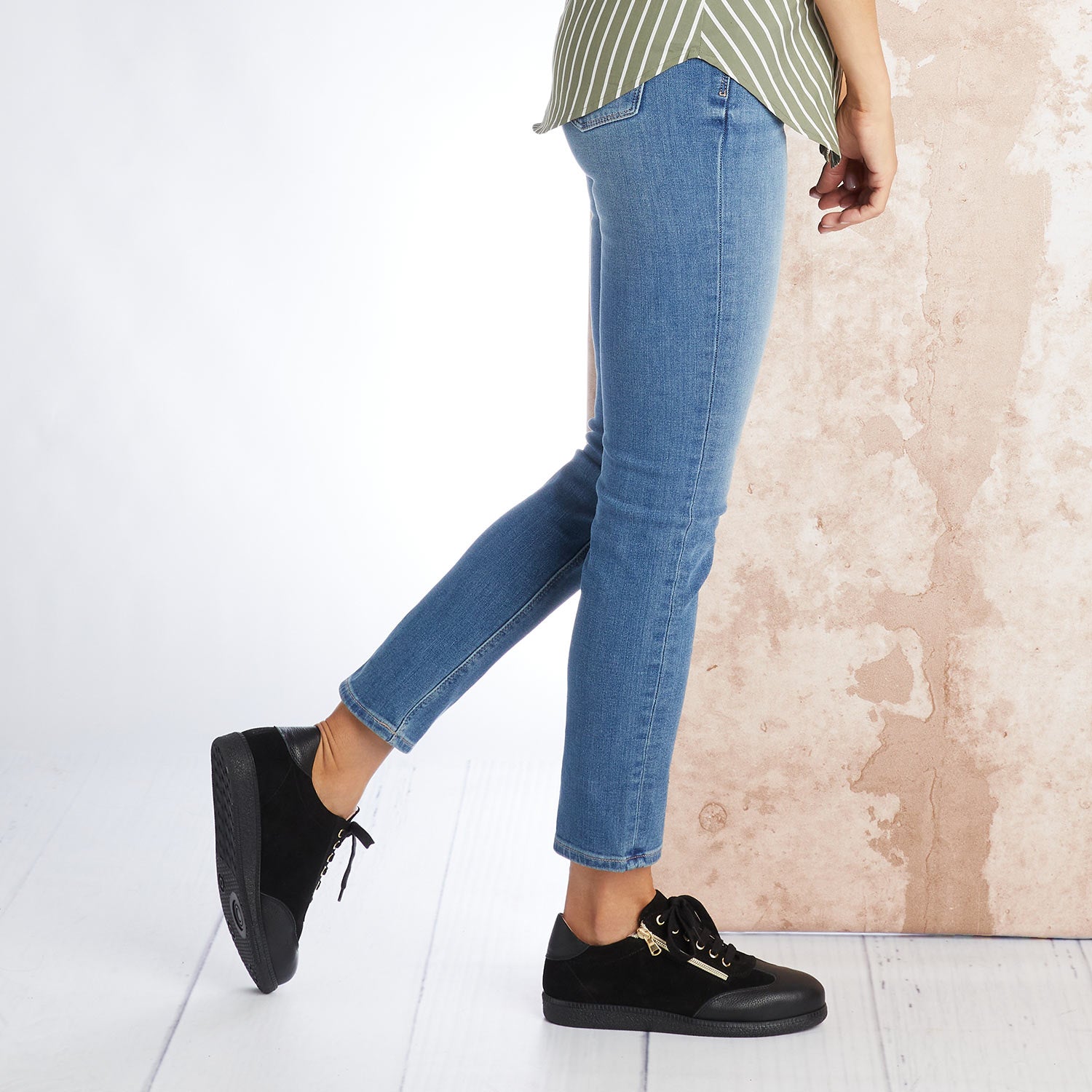
Trainers for Achilles Tendonitis: Miracle Trainers
We recommend: Miracle Trainers such as Swirl: White Leather & Gold - £189
Cushioned, supportive and a must-have for any wardrobe, our Miracle Trainers are our number one choice for comfortable everyday wear.
Swirl features an anatomically contoured footbed with luxurious underfoot cushioning, built-in Miracle Comfort Technology and a lightweight 2.5cm rubber outsole. A full soft leather lining and innovative Bunion Bed™ stretch panel provide even more comfort around sensitive areas.
Shop Miracle Trainers
Walking Shoes for Achilles Tendonitis
We recommend: Trainers like Hero: White Leather - £189
Hero by name, Hero by nature! These comfortable trainers combine plenty of cushioning with an anatomically contoured footbed and a 3cm shock-resistant platform sole to help soften the impact of every step.
Built-in Miracle Comfort Technology and a full soft leather lining provide additional comfort, while the laces and zip fastening help keep your feet feeling secure.
Shop White Trainers
Loafers for Achilles Tendonitis
We recommend: Loafers just like Triumph: Navy Weave Leather - £189
Conquer your day in Triumph. These smart leather loafers prove you don’t have to choose between classic styling and all-day comfort.
Anti-pronating pillows, Triple Layer Cushioning and a shock-resistant rubber heel piece provide cushioning and support underfoot. A soft, seam-free leather lining and hidden Bunion Bed™ stretch panel add extra comfort around sensitive joints.
Shop Loafers
Boots for Achilles Tendonitis
We recommend: Soft boots such as Zen: Black Leather - £249
Discover your inner Zen in these stylish, soft ankle boots. A supportive 5.5cm block heel provides everyday stability, while the full soft leather lining feels gentle around the foot and helps reduce uncomfortable rubbing.
Inside, a contoured footbed with luxurious underfoot cushioning, built-in Miracle Comfort Technology and the innovative Bunion Bed™ provide plenty of additional comfort.
Shop Boots
Low Heels for Achilles Tendonitis
We recommend: Low block heels like Ingrid: Blush Suede - £169
Dressing up doesn’t have to mean reaching for towering heels. Ingrid’s stable 5cm block heel provides gentle elevation, while the elegant blush suede design is picture perfect for taking you from day to night.
Triple Layer Cushioning, anti-pronating arch support and a shock-resistant rubber heel provide comfort and stability underfoot. The wide toe box, soft leather lining and Bunion Bed™ stretch panel also provide extra room around sensitive joints.
Shop Low Heels
Sandals for Achilles Tendonitis
We recommend: A comfortable sandal that’s perfect for wide feet such as Bay: Pale Taupe Suede & Metallic Leather.
Anchors aweigh, it’s time for summer styling with Bay. These platform sandals boast an adjustable slingback which helps keep your foot feeling secure, while the anatomically contoured, cushioned footbed and 4.5cm sole provide comfort and stability with every step.
Built-in Miracle Comfort Technology, a wide toe box and the innovative Bunion Bed™ stretch panel provide extra room and cushioning around sensitive areas.
Shop Sandals